Violent collisions are among the most powerful forces shaping the universe. From galaxies crashing together over billions of years to black holes merging in fractions of a second, cosmic catastrophes are not rare anomalies but fundamental drivers of cosmic evolution. Understanding these events helps explain why the universe looks the way it does today—why galaxies grow, why stars and planets form, and even why life became possible on Earth.
Why the Universe Is a Violent Place
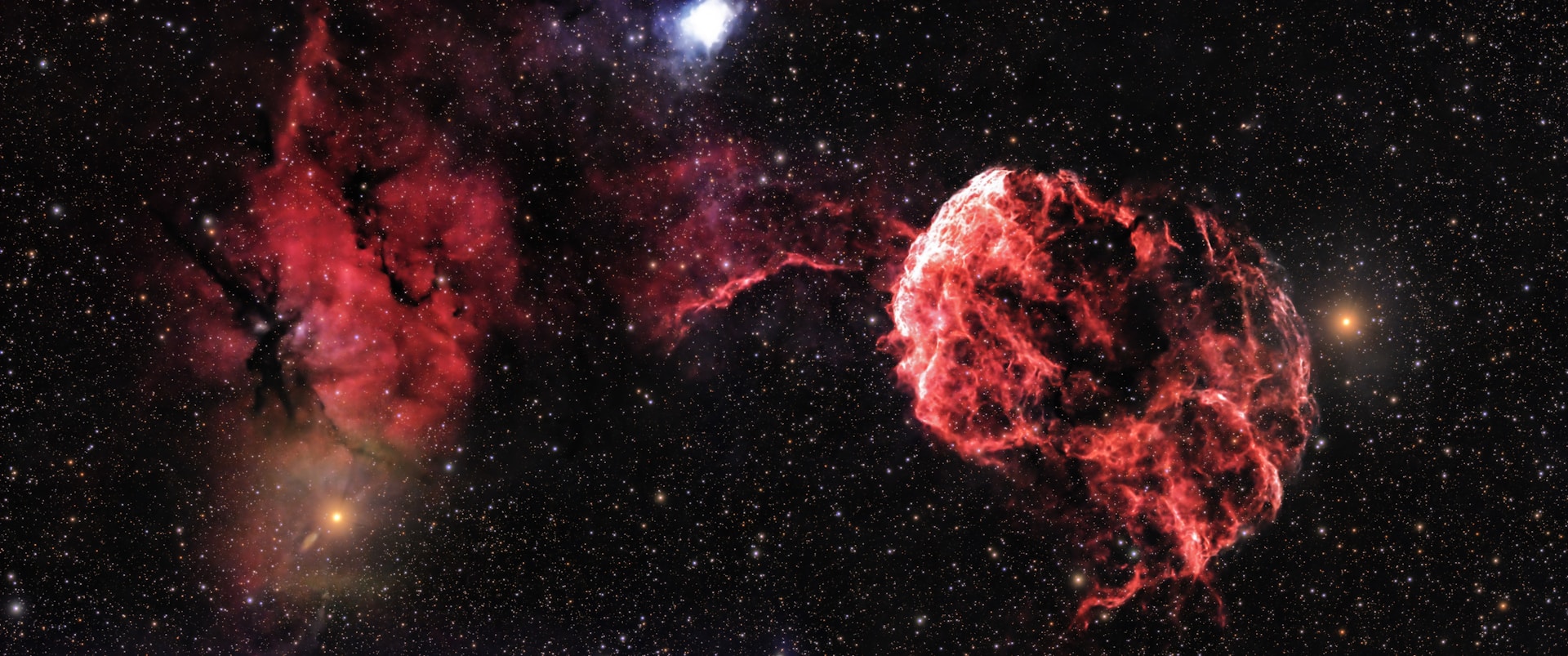
At first glance, space appears calm and empty. In reality, it is governed by gravity, motion, and enormous energy scales. Wherever mass exists, gravity pulls objects together, setting the stage for collisions across vastly different scales.
Cosmic collisions are not accidents; they are consequences of structure formation. As matter clumps under gravity, interactions become inevitable. Over time, these interactions reshape the architecture of the universe, transforming destruction into creation.
Galaxy Mergers: Building the Largest Structures
How Galaxies Collide
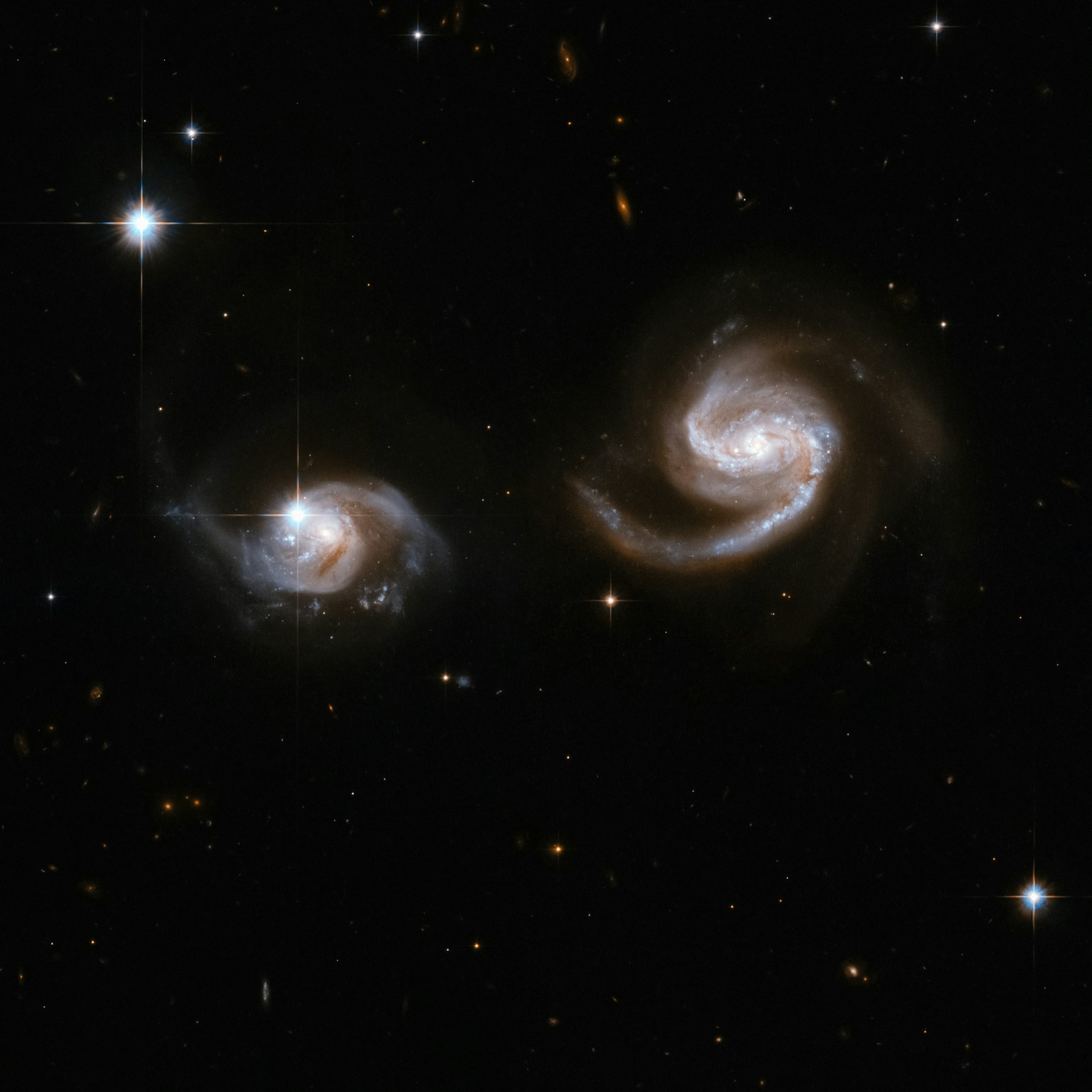
Galaxy mergers are among the grandest collisions in the cosmos. Despite their dramatic reputation, individual stars within merging galaxies rarely collide due to the vast distances between them. Instead, gravity orchestrates a slow, complex dance lasting hundreds of millions or even billions of years.
As galaxies approach, tidal forces stretch spiral arms, trigger waves of star formation, and redistribute gas and dark matter. Eventually, the galaxies coalesce into a single, larger system—often an elliptical galaxy.
Why Galaxy Mergers Matter
Galaxy mergers play a central role in shaping cosmic structure:
-
Mass Growth: Large galaxies grow primarily by absorbing smaller ones.
-
Star Formation Bursts: Collisions compress gas clouds, igniting rapid star formation.
-
Morphological Change: Spiral galaxies can evolve into elliptical galaxies through repeated mergers.
Our own Milky Way is no exception. Astronomical evidence shows it has consumed numerous dwarf galaxies in the past and is on a collision course with the Andromeda Galaxy in about four billion years.
Galactic Collisions and Cosmic Recycling
Mergers do not simply destroy; they recycle. Gas expelled during collisions later cools and forms new stars. Heavy elements forged in earlier generations of stars are redistributed, enriching future planetary systems. In this way, cosmic violence seeds complexity.
Black Hole Collisions: When Spacetime Trembles
Supermassive Black Holes at Galactic Centers
Most large galaxies harbor supermassive black holes at their cores. When galaxies merge, their central black holes eventually spiral toward each other, forming binary systems that lose energy through gravitational radiation.
The final moments of a black hole collision release staggering amounts of energy in the form of gravitational waves, ripples in spacetime predicted by Einstein and directly detected for the first time in 2015.
Why Black Hole Mergers Are Revolutionary
Black hole collisions have transformed astrophysics:
-
Testing General Relativity: Observations confirm Einstein’s theory under extreme conditions.
-
Hidden Universe: Gravitational waves reveal events invisible to traditional telescopes.
-
Galaxy Evolution: Black hole mergers influence star formation by regulating gas through powerful outflows.
These events demonstrate that the universe communicates not only through light, but through spacetime itself.
Planetary Impacts: Destruction That Enables Life
Impacts in the Early Solar System
Planetary collisions were common during the formation of the solar system. Protoplanets frequently collided, merging into larger bodies or shattering into debris. One such collision likely formed Earth’s Moon, when a Mars-sized object struck the early Earth.
These impacts shaped planetary interiors, atmospheres, and orbital dynamics. Without them, rocky planets like Earth may never have formed in stable, life-supporting configurations.
Mass Extinctions and Evolution
On Earth, cosmic impacts have had devastating—but transformative—effects. The asteroid impact 66 million years ago led to the extinction of non-avian dinosaurs, clearing ecological niches that allowed mammals to diversify.
In this sense, catastrophe acted as an evolutionary reset. While destructive in the short term, impacts reshaped life’s trajectory over deep time.
Impacts Beyond Earth
Evidence of massive impacts is found throughout the solar system:
-
Mars: Ancient basins reveal a violent early history.
-
Moon: Craters preserve a record of early bombardment.
-
Icy Moons: Impacts may have fractured ice shells, influencing subsurface oceans.
Planetary impacts are universal processes, not Earth-specific anomalies.
Collisions and the Flow of Energy
Shock Waves and Heating
Collisions convert kinetic energy into heat, radiation, and mechanical motion. In galaxies, shock waves compress gas clouds. In planetary impacts, extreme heat alters crusts and atmospheres. In black hole mergers, energy escapes as gravitational waves traveling across the universe.
These energy transfers drive change. Without them, matter would remain diffuse and inert, incapable of forming complex structures.
From Chaos to Order
Paradoxically, collisions often increase cosmic order. By concentrating matter and triggering feedback processes, they enable stars, planets, and galaxies to form. Catastrophe, in astrophysics, is frequently a precondition for structure.
Cosmic Collisions and Chemical Evolution
Forging the Elements
Some of the universe’s heaviest elements—such as gold and platinum—are created during extreme collisions. While supernovae play a role, neutron star mergers are now known to be major factories of heavy elements through rapid neutron capture processes.
These collisions seed galaxies with materials essential for rocky planets, technology, and biology. The atoms in human bodies are, quite literally, products of ancient cosmic catastrophes.
Distributing the Building Blocks of Life
Galaxy mergers and stellar explosions distribute elements across interstellar space. Over time, this enriched material becomes incorporated into new stars and planetary systems, increasing the likelihood of habitable environments.
Observing Cosmic Collisions
Telescopes Across the Spectrum
Modern astrophysics relies on observing collisions across multiple wavelengths:
-
Optical and Infrared: Reveal star formation and galactic structure.
-
X-ray: Trace hot gas heated by collisions.
-
Radio: Map jets and magnetic fields near black holes.
Each wavelength uncovers different aspects of the same violent events.
Gravitational Wave Astronomy
The detection of gravitational waves has opened an entirely new window on cosmic collisions. Unlike light, gravitational waves travel largely unimpeded, allowing scientists to observe events from the early universe that would otherwise remain hidden.
This emerging field is reshaping our understanding of cosmic history and confirming that collisions are central to how the universe evolves.
Collisions Across Cosmic Time
The Early Universe
In the early universe, matter was denser, making collisions more frequent. Rapid galaxy mergers helped establish the large-scale structure seen today, including galaxy clusters and filaments.
The Present and Future
While the universe is expanding, collisions continue on smaller scales. Galaxies still merge, stars still collide in dense clusters, and planetary impacts remain possible. The cosmos is dynamic, not static.
Looking ahead, future observatories will allow scientists to trace collisions deeper into cosmic history, revealing how early chaos gave rise to present-day complexity.
Why Catastrophe Is Central to Cosmic Evolution
Collisions challenge the intuitive idea that progress requires stability. In the universe, change is driven by disruption. Structure, diversity, and even life itself emerge from cycles of destruction and renewal.
Astrophysics shows that catastrophe is not the opposite of creation—it is one of its primary engines.
Key Takeaways
-
Cosmic collisions occur across all scales, from planets to galaxies.
-
Galaxy mergers drive growth, star formation, and structural evolution.
-
Black hole collisions generate gravitational waves and reshape galaxies.
-
Planetary impacts influence planetary formation, atmospheres, and biological evolution.
-
Collisions redistribute energy and matter, enabling complexity.
-
Heavy elements essential to life are forged in extreme cosmic collisions.
-
Modern astronomy observes collisions through light and gravitational waves.
-
Catastrophe is a fundamental force shaping the universe’s past, present, and future.
Conclusion
The universe is not shaped by quiet continuity but by dramatic encounters. Galaxy mergers, black hole collisions, and planetary impacts are not rare disasters—they are essential mechanisms of cosmic evolution. Through violence and transformation, the universe builds structure, creates diversity, and lays the groundwork for life. By studying cosmic collisions, we gain insight into a profound truth: in the cosmos, destruction and creation are inseparable, and catastrophe is often the beginning of something new.