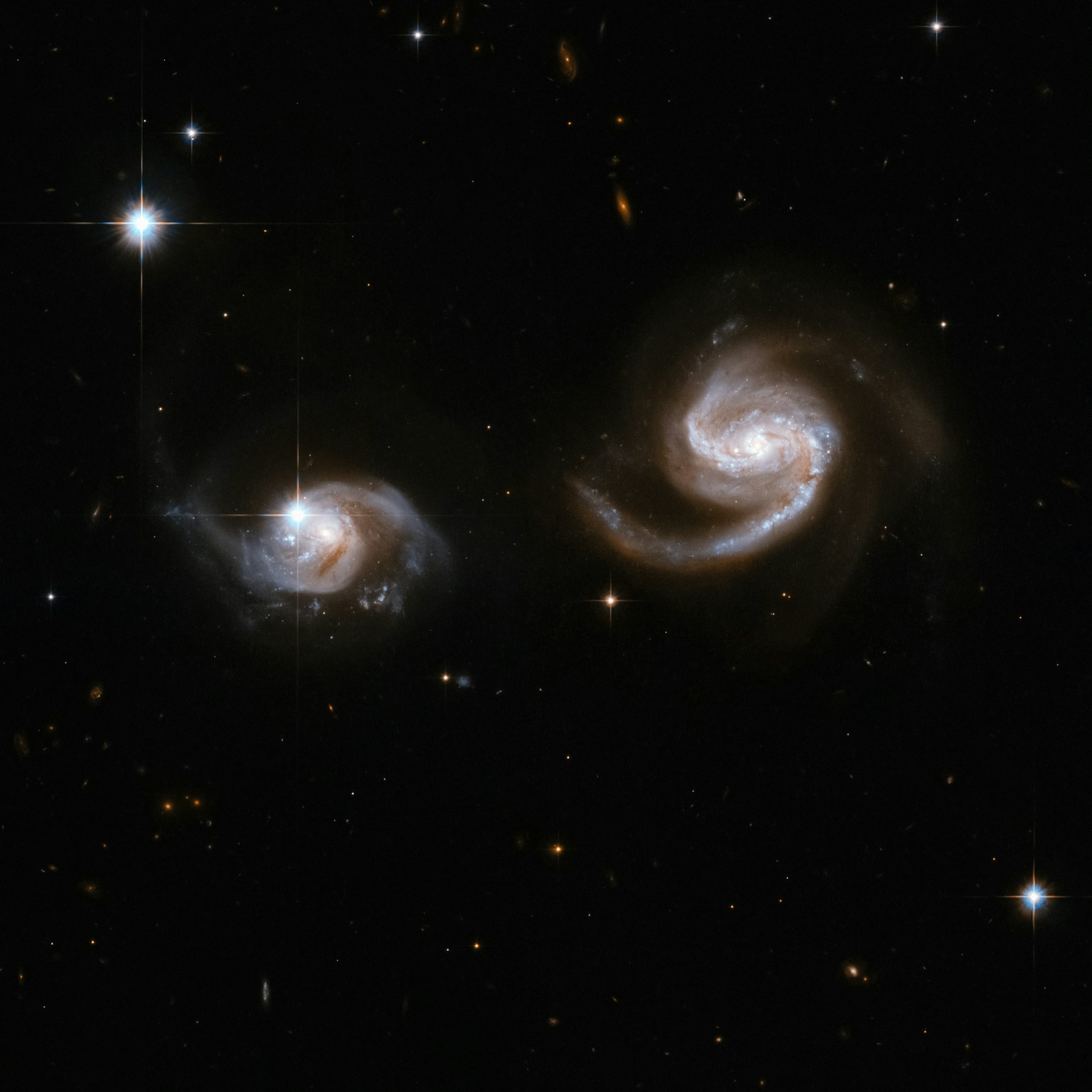
The idea that our universe may be just one of countless others has captivated both scientists and the public for decades. Known as the multiverse hypothesis, this concept stretches the boundaries of physics, philosophy, and cosmology. From quantum mechanics to inflation theory, multiple lines of scientific reasoning suggest that our universe may not be unique. Understanding the multiverse challenges our assumptions about reality, tests the limits of scientific inquiry, and invites us to reconsider the nature of existence itself.
Defining the Multiverse

The multiverse refers to the hypothetical existence of multiple, potentially infinite universes beyond our own observable cosmos. These universes could differ in fundamental constants, physical laws, and even the structure of spacetime. While the term “multiverse” is relatively recent, the idea has roots in both philosophy and modern physics.
Types of Multiverses
Physicists categorize multiverse theories into several broad types:
-
Level I: Infinite Space – Our universe may extend infinitely, with regions beyond our observable horizon that are effectively separate universes.
-
Level II: Bubble Universes – Cosmic inflation could produce separate “bubbles” of spacetime, each with distinct physical laws.
-
Level III: Quantum Many-Worlds – In quantum mechanics, every possible outcome of a quantum event branches into a separate universe.
-
Level IV: Ultimate Ensemble – Max Tegmark’s proposal that all mathematically possible structures exist as realities.
Each type arises from different theoretical considerations, but all share the idea that reality extends beyond our direct perception.
Quantum Cosmology and the Many-Worlds Interpretation
Quantum Mechanics and Branching Realities
The many-worlds interpretation (MWI) of quantum mechanics suggests that every quantum measurement produces multiple outcomes, each realized in a separate branch of the universe. Unlike traditional collapse theories, MWI treats the wavefunction as objectively real, with no special role for observers.
For example, consider a simple quantum experiment: an electron passes through a double slit. In the multiverse framework, each possible path the electron could take exists in a distinct branch. This implies a staggering number of parallel realities, all evolving simultaneously.
Philosophical Implications
The many-worlds approach forces a reevaluation of identity, causality, and determinism. If every choice we make spawns alternate outcomes, the concept of a single, coherent history becomes less meaningful. Ethics, free will, and probability may need reinterpretation in the context of a branching multiverse.
Inflation Theory: Cosmic Bubbles
How Inflation Creates Multiple Universes
Inflation theory, developed to explain the early rapid expansion of the universe, predicts that regions of space can stop inflating at different times. Each region that stops inflating becomes a “pocket universe,” with its own distinct physical properties.
These bubble universes may have different:
-
Fundamental constants (e.g., the strength of gravity or electromagnetism)
-
Particle physics laws (types of particles and interactions)
-
Spatial dimensions (some theories allow extra dimensions)
From this perspective, our universe is just one bubble among potentially infinite others, each with unique properties that may permit or prohibit life.
Observational Challenges
Since other bubbles are beyond our cosmological horizon, detecting them directly is challenging. Some researchers explore indirect evidence, such as anomalies in the cosmic microwave background (CMB), which could indicate collisions between bubbles.
Philosophical and Scientific Considerations
Testability and Falsifiability
Critics argue that multiverse theories are difficult to test, raising questions about whether they qualify as science. While direct observation may be impossible, researchers focus on indirect predictions and internal consistency with established theories. For example, inflationary models predicting a multiverse also produce testable features in the CMB.
The Anthropic Principle
The multiverse provides a context for the anthropic principle, which explains why the universe appears finely tuned for life. In a multiverse of countless universes, only those with physical constants compatible with life are observed. From this viewpoint, the apparent “fine-tuning” of our universe is a selection effect rather than a cosmic coincidence.
Implications for Reality
If multiverses exist, the philosophical implications are profound:
-
Reality is vastly larger than our perception.
-
Our universe may not be special or unique.
-
Concepts like probability, causality, and identity may require redefinition.
Parallels in Literature and Culture
The multiverse concept has long inspired fiction and thought experiments. Works ranging from Jorge Luis Borges’ The Garden of Forking Paths to modern science fiction explore alternate realities, branching timelines, and parallel selves. These narratives reflect humanity’s intuitive engagement with the notion of infinite possibilities, bridging science and imagination.
Thought Experiments
Consider Schrödinger’s cat: in a many-worlds framework, the cat is both alive and dead, but in separate universes. This scenario illustrates how multiverse ideas transform our understanding of certainty, chance, and the nature of observation.
Potential Evidence and Future Research
Cosmological Clues
Researchers search for subtle signs of other universes in the observable universe, including:
-
CMB anomalies: Unexplained temperature fluctuations might hint at collisions with other bubble universes.
-
Gravitational wave signatures: Early-universe events could leave traces detectable in spacetime ripples.
-
High-energy particle physics: Experiments probing fundamental interactions may reveal hints of extra dimensions or multiverse dynamics.
The Role of Theory and Simulation
Much multiverse research relies on computational modeling and theoretical frameworks. Simulations of cosmic inflation, string theory landscapes, and quantum branching help scientists explore the plausibility and consequences of multiple universes.
Ethical and Existential Considerations
The multiverse hypothesis raises questions about responsibility and significance. If infinite realities exist, does individual action matter? Philosophers debate whether multiverse cosmology undermines meaning or simply reframes it in a broader context.
The Multiverse in Context
While multiverse theories remain speculative, they are grounded in legitimate physics. Quantum mechanics, inflationary cosmology, and string theory all suggest scenarios where multiple universes naturally arise. Even if direct evidence remains elusive, exploring the multiverse expands the boundaries of science, challenging assumptions about uniqueness, observation, and the scope of reality.
Comparing Scientific and Philosophical Approaches
-
Scientific: Focuses on internal consistency, mathematical models, and indirect evidence.
-
Philosophical: Explores implications for knowledge, identity, and meaning.
-
Cultural: Shapes literature, art, and public imagination, reflecting our fascination with alternative possibilities.
Key Takeaways
-
The multiverse hypothesis suggests that our universe may be one of countless others.
-
Quantum mechanics, inflation theory, and string theory provide frameworks supporting multiple realities.
-
Observational evidence is challenging but may include CMB anomalies, gravitational waves, or particle physics signatures.
-
The multiverse offers a natural explanation for fine-tuning through the anthropic principle.
-
Philosophical implications include reconsideration of causality, identity, and significance.
-
Fiction and culture explore multiverse concepts, reflecting human curiosity about alternative realities.
-
Multiverse research combines theory, simulation, and indirect observations to explore beyond our observable universe.
-
Whether or not other universes exist, the hypothesis expands the scope of scientific and philosophical inquiry.
Conclusion
The multiverse hypothesis challenges the very notion of a singular, unique reality. From quantum branching to cosmic inflation, modern physics provides plausible scenarios in which countless universes exist alongside our own. While definitive proof may remain out of reach, studying these ideas deepens our understanding of cosmology, physics, and the philosophical implications of existence. Ultimately, the multiverse invites us to imagine a reality far larger and stranger than our immediate perception, where every possibility may play out somewhere in the vast expanse of existence.