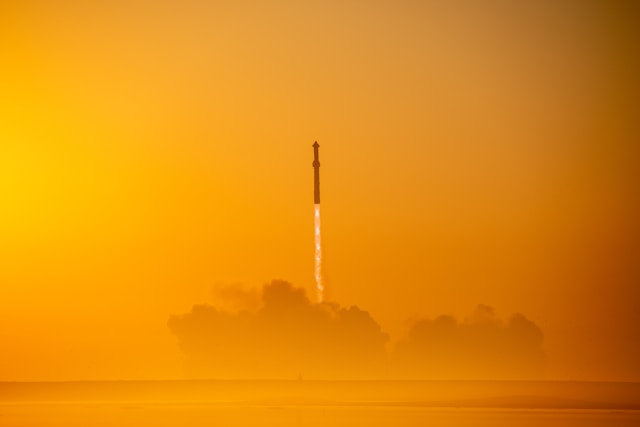
The past two decades have witnessed a dramatic transformation in space exploration, shifting from government-led initiatives to private enterprise. At the forefront of this shift is SpaceX, a company that has redefined what is possible in rocket technology, commercial spaceflight, and the broader space economy. The rise of private actors in the space sector has implications for innovation, sustainability, and humanity’s long-term relationship with the cosmos. Understanding SpaceX’s trajectory provides insight into how private enterprise is shaping the final frontier and what this means for global science, industry, and society.
From Government Monopoly to Private Ambition
Historically, space exploration was dominated by national agencies such as NASA, Roscosmos, and ESA. High costs, complex logistics, and geopolitical considerations made space access a state-controlled domain. The late 20th century saw the emergence of private aerospace contractors, but ventures were largely service providers rather than innovators in rocket design and space commercialization.
SpaceX, founded by Elon Musk in 2002, disrupted this model by introducing a vision of reusable rockets, cost reduction, and long-term human settlement beyond Earth. Musk’s mission combined technical ambition with a clear commercial strategy: lower the barriers to spaceflight while fostering a sustainable industry capable of supporting interplanetary exploration.
Democratizing Access to Space
One of SpaceX’s central contributions is democratization. By significantly reducing launch costs through innovations like reusable Falcon 9 boosters, the company has made space accessible to private companies, academic institutions, and even emerging nations. This shift enables a broader range of actors to participate in satellite deployment, research, and potential resource extraction, transforming space into a more commercially vibrant ecosystem.
Innovations in Rocket Technology
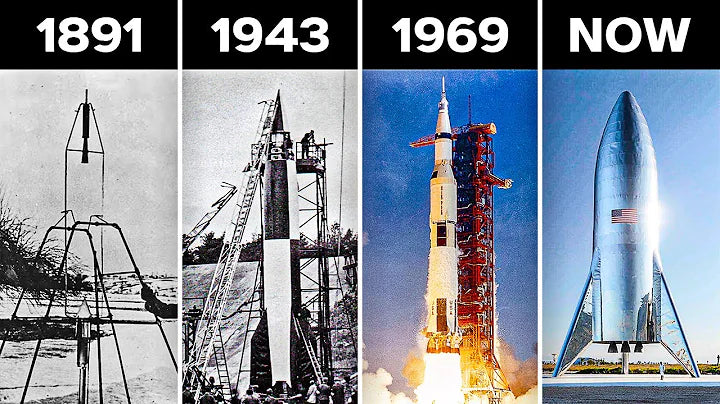
SpaceX’s technological advancements have fundamentally altered the economics and feasibility of space travel. The company’s emphasis on vertical integration—designing, manufacturing, and testing in-house—accelerated development cycles and reduced costs.
Reusable Rockets
Traditionally, rockets were single-use, with stages discarded after launch. SpaceX pioneered recovery and refurbishment of the Falcon 9 first stage, a breakthrough that cuts costs, reduces material waste, and increases launch frequency. Reusability also allows more flexible scheduling and rapid iteration in engineering design, creating a feedback loop that accelerates innovation.
Starship and Interplanetary Vision
Beyond Falcon 9, SpaceX is developing Starship, a fully reusable spacecraft designed for long-duration missions, including Mars colonization. Starship exemplifies the convergence of engineering ambition and commercial strategy: it promises to transport large payloads and humans at a fraction of the historical cost, enabling missions that were previously theoretical.
Key SpaceX Innovations:
-
Reusable Falcon 9 first stage, reducing launch costs and material waste.
-
Starship spacecraft for large payloads and interplanetary missions.
-
Vertical integration of design, manufacturing, and testing to accelerate development.
-
Starlink satellite constellation providing global internet access.
-
Commercial cargo and crew transport to the ISS, expanding public-private collaboration.
-
Advanced guidance, navigation, and landing systems for rockets.
-
Rapid iteration and prototyping culture, shortening development cycles.
This list highlights how SpaceX’s technological and strategic innovations collectively redefine the economics, accessibility, and future potential of space exploration.
Commercialization and the Space Economy
SpaceX has catalyzed the commercialization of the orbital economy. By providing launch services to private companies, satellite operators, and governments, the company has enabled new business models in telecommunications, Earth observation, and research.
Satellite Constellations
SpaceX’s Starlink project demonstrates the potential of large-scale satellite constellations. By providing global internet coverage, Starlink represents both a technological innovation and a new revenue stream that can fund further exploration initiatives. Moreover, it illustrates how private companies can integrate business objectives with broader societal impact.
Supply and Logistics
Commercial space services extend beyond satellites. SpaceX’s Cargo Dragon missions to the International Space Station (ISS) highlight how private operators can support scientific research, logistics, and infrastructure maintenance in orbit, traditionally government-managed tasks. This evolution reduces reliance on public funding and encourages efficiency through market competition.
Regulatory and Ethical Considerations
The rise of private space companies introduces regulatory and ethical challenges. Space traffic management, debris mitigation, planetary protection, and equitable access are pressing concerns as orbital activity increases.
International Governance
Unlike terrestrial industries, space lacks a comprehensive enforcement mechanism for private actors. Treaties such as the Outer Space Treaty provide general guidance, but national regulatory frameworks and private initiative often intersect unpredictably. SpaceX’s activities necessitate collaboration between governments, international bodies, and commercial stakeholders to ensure safety, sustainability, and fair access.
Environmental Impact and Sustainability
Rocket launches carry environmental costs, including emissions, fuel residues, and orbital debris. SpaceX has addressed some of these challenges through engineering improvements, but long-term sustainability requires industry-wide standards and innovations in materials, propulsion, and debris management. This highlights the dual responsibility of private companies: commercial success and planetary stewardship.
Driving Innovation Through Competition
SpaceX’s achievements have spurred competition across the aerospace industry. Other private companies—Blue Origin, Rocket Lab, Relativity Space—have accelerated innovation, leading to faster development cycles, novel technologies, and diversified services.
Vertical Integration vs. Outsourcing
SpaceX’s approach of controlling nearly every aspect of production contrasts with traditional outsourcing models. This strategy has allowed rapid prototyping, reduced cost overruns, and higher quality assurance. Competitors adopting different models illustrate that multiple pathways exist to innovation, yet SpaceX’s model has set a new benchmark for speed and efficiency.
Public-Private Partnerships
Collaboration with NASA and other space agencies has been mutually beneficial. Contracts like Commercial Resupply Services and Commercial Crew Program have provided revenue and credibility for SpaceX while giving agencies access to cutting-edge technology. This hybrid model combines entrepreneurial agility with public oversight, accelerating progress in ways previously unimaginable.
Cultural and Societal Implications
The privatization of space is reshaping public perception of exploration. SpaceX has made rocket launches highly visible cultural events, inspiring interest in STEM fields, space policy, and entrepreneurship. Media coverage of Falcon 9 landings, Crew Dragon missions, and Starship tests highlights the dramatic possibilities of human ingenuity.
Space as a Frontier for Humanity
Beyond commerce, SpaceX promotes a vision of humanity as an interplanetary species. This vision carries philosophical and ethical dimensions: questions about colonization, planetary stewardship, and human survival in extraterrestrial environments. The company’s narrative underscores that private enterprise is not merely profit-driven but can shape long-term human aspirations.
Challenges and Future Outlook
Despite success, SpaceX faces ongoing challenges. Technical risks, regulatory scrutiny, international competition, and the financial demands of interplanetary ambitions pose significant hurdles. Additionally, balancing commercial objectives with ethical and environmental responsibility will determine the sustainability of the privatized space model.
Scaling Human Spaceflight
Starship’s development, intended for lunar and Mars missions, exemplifies the complexity of scaling human spaceflight. Life-support systems, radiation protection, and long-duration mission planning require breakthroughs in engineering, medicine, and logistics. SpaceX’s ability to innovate under uncertainty will influence the trajectory of private space exploration for decades.
Market Volatility and Economic Factors
The commercial space industry is sensitive to global economic trends. Investment cycles, government contracts, and satellite demand fluctuations impact profitability. Companies like SpaceX must navigate financial risk while maintaining technological momentum, illustrating the interdependence of market forces and engineering achievement.
The Broader Impact on Space Industry
SpaceX’s rise has fundamentally altered expectations of what private enterprise can achieve in space. The company has accelerated timelines, reduced costs, and expanded the range of actors involved. Its influence extends beyond rockets to reshape regulatory frameworks, inspire innovation, and broaden the societal relevance of space exploration.
The privatization of the final frontier reflects a paradigm shift: space is no longer an exclusive government domain but a domain where commerce, innovation, and human aspiration converge. This evolution promises a future in which exploration, sustainability, and economic opportunity are intertwined.
Key Takeaways
-
SpaceX has transformed the space sector through innovation, reusability, and cost reduction.
-
Privatization enables broader participation in space exploration, including private companies, research institutions, and emerging nations.
-
Reusable rockets and Starship technology are revolutionizing mission economics and interplanetary potential.
-
Commercial initiatives such as Starlink illustrate how private enterprise can integrate business objectives with societal benefits.
-
Regulatory frameworks must adapt to manage space traffic, debris, and ethical concerns in a privatized domain.
-
Competition and public-private partnerships drive accelerated innovation in aerospace.
-
Cultural impact includes increased public engagement, STEM inspiration, and a vision of interplanetary human life.
-
Long-term success depends on technical achievement, sustainability, ethical stewardship, and financial resilience.
Conclusion
The rise of SpaceX exemplifies how private enterprise can reshape the final frontier, combining technological innovation, commercial ambition, and visionary exploration. By lowering costs, developing reusable rockets, and pioneering interplanetary missions, SpaceX has expanded the possibilities for humanity in space. Its influence extends from industry standards and regulatory frameworks to cultural imagination and scientific ambition. The privatization of space signals not only a new era of commerce but also an expanded horizon for human potential, demonstrating that the final frontier is increasingly a shared domain of innovation, responsibility, and discovery.